Safeguarding has become one of the most urgent priorities in the Church and society today. Across dioceses, religious congregations, educational institutions, and civil organisations, significant efforts have been made to create safer environments, particularly for children and vulnerable adults. These efforts are necessary, long overdue, and non-negotiable.
Yet safeguarding also presents a difficult challenge that is often overlooked: How do we protect the vulnerable while ensuring justice for those who may be falsely accused?
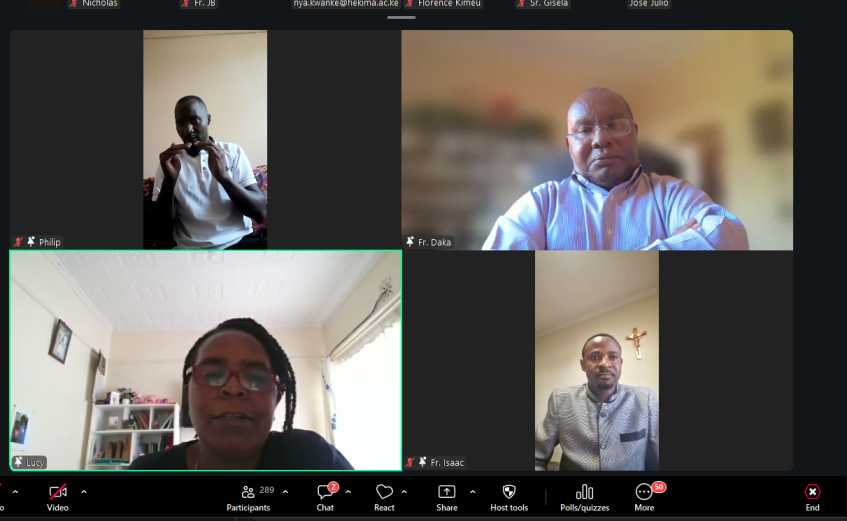
This important question was the focus of a webinar organized by JCSA Africa on 27 May 2026, titled “Safeguarding, Justice and Compassion: Journeying with the Falsely Accused.” The webinar was presented by Rev. Dr. Isaac Mutelo, OP, a scholar of law, theology, and ethics, who invited participants to reflect on the often-neglected experiences of individuals who face allegations that later prove to be unfounded.
A Necessary Tension in Safeguarding
Dr. Mutelo began by acknowledging that safeguarding rightly occupies a central place in contemporary Church life. The protection of children and vulnerable adults is a moral obligation rooted in the Gospel and reinforced by safeguarding policies, human rights principles, and legal frameworks.
However, he cautioned that safeguarding must not lose sight of another fundamental principle: not every accusation is true.
While many allegations of abuse are valid and deserve serious attention, the possibility of false accusations remains a reality. When a person is wrongly accused, the consequences can be devastating. Reputations can be destroyed, ministries suspended, careers interrupted, relationships damaged, and communities divided long before investigations are completed.
This creates what Dr. Mutelo described as a “necessary tension.” On one hand, institutions must protect those who report abuse. On the other hand, they must ensure fairness and justice for those accused.
The central question becomes: How do we protect the vulnerable without abandoning the falsely accused?
A Gospel Perspective on Justice
According to Dr. Mutelo, this question is not merely legal or procedural. It is deeply theological.
The Gospel consistently upholds two inseparable principles: the protection of the vulnerable and the dignity of every human person. Jesus identifies himself with the vulnerable, teaching that whatever is done to “the least of these” is done to him. At the same time, Christ repeatedly reaches out to those who are marginalized, rejected, or condemned.
Drawing on the image of the Good Shepherd leaving ninety-nine sheep to search for one that is lost, Dr. Mutelo suggested that the falsely accused may sometimes represent that “one” who risks being forgotten amid legitimate efforts to support victims of abuse.
The protection of vulnerable persons remains essential. Yet Christian justice requires that every person, including the accused, be treated with dignity and fairness.
The Human Cost of False Accusations
One of the strongest themes of the webinar was the recognition that false accusations can inflict profound harm.
History offers numerous examples of individuals who were wrongly convicted and spent years, sometimes decades, in prison before evidence emerged proving their innocence. Such cases remind us that legal systems, safeguarding structures, and investigative processes, while necessary, are not infallible.
Dr. Mutelo emphasized that evidence must always be carefully examined and that truth should remain the ultimate objective. Strong evidence does not automatically guarantee truth, nor should public opinion replace due process.
The experience of being falsely accused can result in social isolation, psychological distress, loss of employment, suspension from ministry, and long-term stigma. Even after innocence is established, many individuals continue to struggle with damaged reputations and broken relationships.
Presumption of Innocence and Due Process
The webinar highlighted the importance of preserving the presumption of innocence, a principle recognized in canon law, civil constitutions, and international human rights frameworks.
Canon law affirms that a person is considered innocent until proven guilty. Similarly, legal systems worldwide require that accusations be investigated thoroughly and fairly before conclusions are reached.
Dr. Mutelo warned against allowing emotions, assumptions, or public pressure to determine outcomes before investigations are complete. Communities often seek quick answers during safeguarding cases, but justice requires patience, impartiality, and adherence to proper procedures.
Safeguarding systems fail when they prioritize appearances over truth or outcomes over fairness.
Why False Accusations Occur
The webinar acknowledged that false accusations can emerge for various reasons.
Some arise from misunderstandings, misinterpretations of actions, cultural differences, or psychological factors. Others may result from personal conflicts, manipulation, or deliberate attempts to harm another person.
Dr. Mutelo shared examples illustrating how children and vulnerable persons can sometimes be influenced by adults to make false allegations. Such cases do not diminish the reality of genuine abuse. Rather, they remind safeguarding practitioners that every allegation must be carefully and professionally investigated.
The seriousness of abuse demands that all allegations be taken seriously. The seriousness of justice demands that all allegations be examined fairly.
Journeying with the Falsely Accused
A key contribution of the webinar was its reflection on what it means to “journey with” those who have been accused.
The language of journeying reflects a deeply Christian understanding of accompaniment. It means refusing to abandon people during moments of crisis, uncertainty, and suffering.
When accusations are under investigation, communities should avoid gossip, speculation, and public judgment. Confidentiality should be respected. The accused should not be socially, emotionally, or spiritually isolated.
Dr. Mutelo argued that individuals facing accusations need access to spiritual accompaniment, psychological support, counselling, and pastoral care. Temporary suspension from ministry or employment, when necessary for safeguarding purposes, should never be interpreted as proof of guilt.
The Church’s mission of accompaniment extends even to those who are imprisoned. Human dignity remains intact regardless of circumstances, and the possibility of truth remains open.
Restoring the Innocent
One of the greatest challenges arises when a person is eventually cleared of wrongdoing.
Legal acquittal does not automatically restore trust, reputation, or emotional well-being. Communities often struggle to reintegrate individuals who have previously been accused, even after innocence has been established.
The webinar emphasized that restoration requires intentional action. Institutions, religious communities, and society must actively support the reintegration of those who have been wrongly accused.
Justice may clear a person’s name, but communities must help restore relationships, dignity, and a sense of belonging.
Building Balanced Safeguarding Systems
Dr. Mutelo called for safeguarding systems that are both protective and just.
Such systems must prioritize the safety of children and vulnerable adults while simultaneously safeguarding the rights and dignity of the accused. They must uphold accountability without prejudgment, transparency without destroying reputations, and policy compliance without losing sight of the human person.
Balanced safeguarding systems require wisdom, humility, compassion, and a steadfast commitment to truth.
Safeguarding is Everyone’s Responsibility
The webinar concluded by stressing that safeguarding is not the responsibility of safeguarding officers alone.
It belongs to bishops, priests, religious, educators, parents, students, administrators, and every member of the Church and society. Creating safe communities requires collective responsibility.
Participants were challenged to build cultures that resist gossip, avoid rushing to judgment, and promote truth rooted in charity. As Dr. Mutelo observed, “truth without charity wounds, and charity without truth enables.”
Authentic safeguarding requires both.
Moving Forward
The Church’s safeguarding mission must continue to place survivors and vulnerable persons at the centre of its concern. At the same time, it must remain committed to justice, fairness, and compassion for all involved in safeguarding processes.
Protecting the vulnerable and defending the dignity of the falsely accused are not competing goals. They are complementary expressions of the Church’s commitment to truth, justice, and mercy.
The challenge before us is not choosing one over the other. The challenge is holding them together.
Only then can safeguarding truly reflect the compassionate and just face of Christ.