Safeguarding begins with protection, but it cannot end there. This was the central message of a recent webinar that invited participants to rethink safeguarding not simply as a system of policies and procedures, but as a journey toward healing, restoration, accountability and cultural transformation.
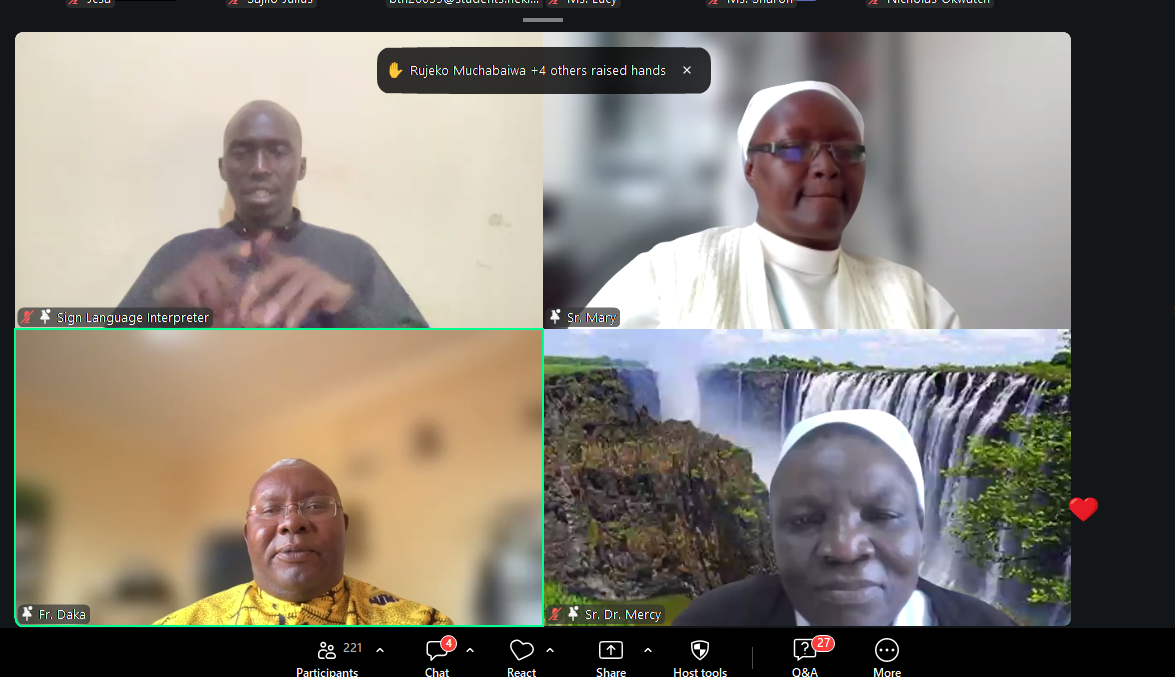
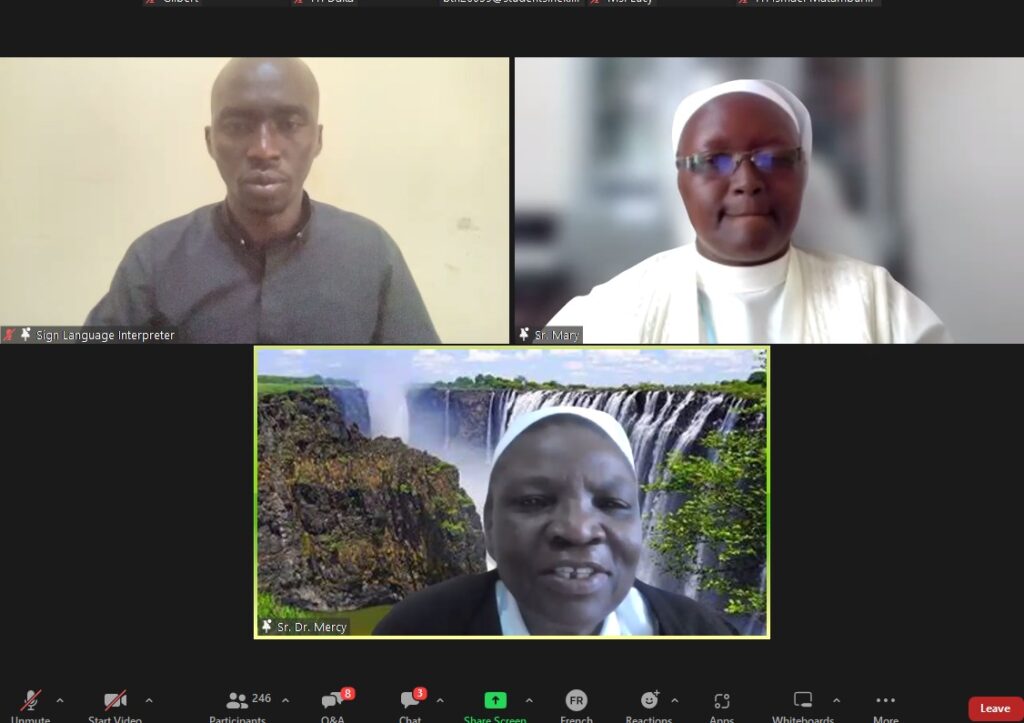
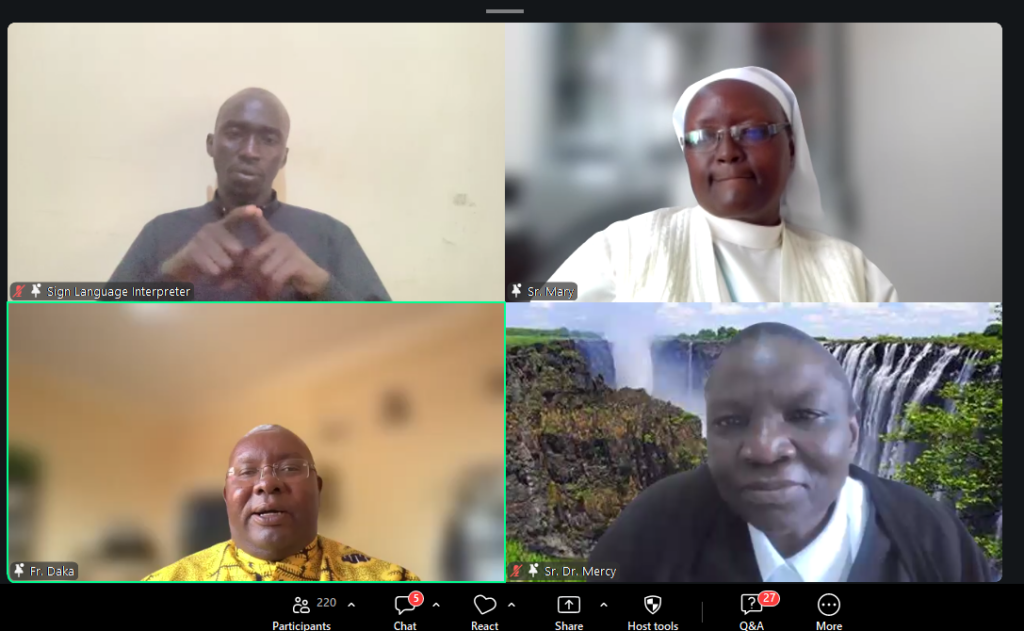
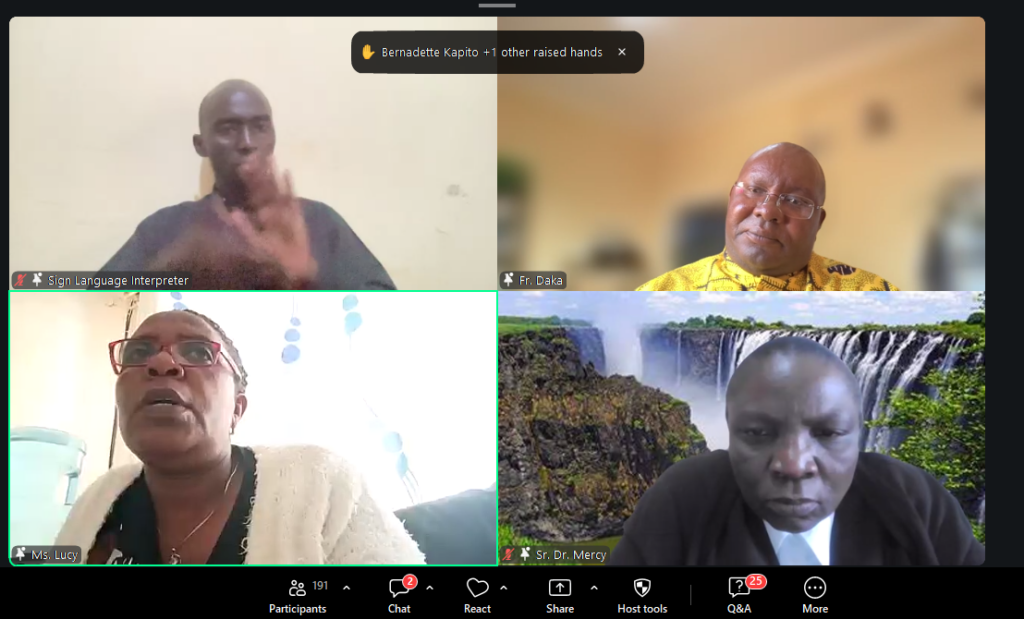
Bringing together reflections from Sr. Dr. Mercy, Sr. Dr. Mary and Fr. Dr. Daka, the webinar explored what it means to create communities where children, vulnerable adults and survivors of abuse are not only protected from harm but also heard, supported, respected and enabled to flourish.
The discussion placed human dignity at the centre of safeguarding. As Sr. Dr. Mercy reminded participants, “behind every police is a person, and behind every report is a human story.” Safeguarding therefore requires more than responding appropriately when harm occurs. It calls communities to prevent harm, create safe environments, exercise power responsibly and ensure that people can raise concerns without fear.
From having safeguarding to becoming a safeguarding community
One of the webinar’s key distinctions was between having safeguarding structures and actually becoming a safeguarding community.
Policies, reporting mechanisms and procedures remain important, but they do not automatically make people feel safe. Sr. Dr. Mercy explained that there is a difference between “safeguarding for people” and “safeguarding with people.” The latter involves listening to people and allowing them to participate in shaping safer systems.
A safeguarding culture is therefore experienced in everyday interactions: how leaders respond to concerns, whether people feel safe to speak, whether those who report are protected, and whether uncomfortable truths are welcomed or silenced.
This understanding is particularly important where relationships of power and dependence exist. Children may depend on adults for care, education and spiritual guidance. People experiencing poverty may depend on institutions or individuals for employment and support, while vulnerable adults may depend on institutions for essential services. Such dependence can make speaking up difficult.
The question, therefore, is not merely whether a reporting mechanism exists. It is whether people can safely use it.
Listening: giving people space to be heard
Listening emerged as one of the most important foundations of effective safeguarding.
Sr. Dr. Mercy shared the story of a woman who had carried a painful experience for many years. Rather than attempting to fix her story, she simply listened and gave her space to speak. When the woman finished, she said: “I wanted someone to listen to me. I wanted to cry and I needed this space.”
The story illustrates a fundamental principle: listening itself can be an important safeguarding response.
Drawing on the Gospel story of Bartimaeus, Sr. Dr. Mercy reflected on how Jesus stopped, listened and created space for his voice rather than allowing the crowd to silence him. She emphasized that listening becomes meaningful when it leads to action. “Your voice matters. Your experience matters,” she told participants.
For children in particular, listening requires attentiveness to forms of communication beyond words. Children may communicate distress through behaviour, play, drawing, silence or changes in relationships. They should therefore not only be protected but also heard.
The webinar also stressed that survivors must be treated as whole persons, not merely as sources of information. Asking only what happened may overlook what the experience meant to the person and how it affected their life.
When people are dismissed, blamed, ignored or disbelieved, the response to harm can become another source of injury. As Sr. Dr. Mercy cautioned, “No one should be hurt again simply because they sought help.”
Accountability means facing the truth
The movement from listening to accountability requires institutions and individuals to face difficult questions: What did we know? What did we do? What did we fail to see? Who was harmed? Whose voice was missing? What must change?
For Sr. Dr. Mercy, accountability is not primarily about blame or vengeance. It is about facing the truth, seeking justice, taking responsibility, learning from what happened and changing what needs to change.
She also stressed that safeguarding must operate within civil and criminal law, mandatory reporting requirements, canonical processes and due process, while protecting the rights and safety of survivors and accused persons.
A particularly powerful reflection was the statement: “We got this wrong.” According to Sr. Dr. Mercy, institutional humility can be painful, but acknowledging mistakes can also become the beginning of rebuilding trust. The deeper question is not simply whether an institution followed a procedure, but “Did we do what was right for the person?”
The webinar made clear that listening does not replace investigation, healing does not replace justice, and restoration does not replace accountability. These responsibilities must work together.
Healing cannot be forced or rushed
The impact of abuse and other forms of harm can extend deeply into a person’s identity, relationships, spirituality and sense of safety. Healing therefore cannot be reduced to a single formula.
Sr. Dr. Mercy emphasized that people respond differently to trauma. Some may speak immediately, while others may remain silent for years. Some may tell their entire story, while others may only be able to share fragments. “Healing is personal. Healing is not linear,” she explained.
For people whose faith has been wounded, the questions can be particularly difficult: Where was God? Can I still trust the Church? Can I still belong?
The webinar cautioned against simplistic spiritual responses. Christian hope does not require survivors to deny their suffering, and religious language should never be used to justify the behaviour that caused harm. Healing may involve professional support, pastoral accompaniment, safe relationships, community and time.
Forgiveness and reconciliation must also be approached carefully. Forgiveness cannot be imposed, and survivors do not have to reconcile with a perpetrator in order to heal. As Sr. Dr. Mercy stated, “A survivor does not have to reconcile with a perpetrator in order to heal.”
The responsibility of safeguarding communities is therefore not to dictate how a survivor should heal, but to accompany the person with patience, respect and care.
Restoration: rebuilding trust and belonging
Restoration does not mean returning to the way things were before harm occurred. Instead, it means creating conditions in which trust, dignity and belonging can grow again.
Harm can affect individuals, families, friendships, ministries, parishes, religious communities and institutions. Survivors may ask whether they can still belong or whether they can trust their community again.
Restoration begins by taking those questions seriously. It may require acknowledging what happened, listening without defensiveness, expressing genuine regret and ensuring that survivors continue to receive support and retain a voice.
Sr. Dr. Mary expanded this understanding by describing restoration as having personal, relational, spiritual and institutional dimensions. “When one member is suffering or when one member is wounded, we all suffer,” she said, drawing on the image of the Church as the Body of Christ.
Restoration, therefore, is not only about helping an individual recover. It also asks communities and institutions to examine the conditions that contributed to harm and to rebuild relationships and structures in ways that promote safety and dignity.
Culture, community and the responsibility to transform
The webinar also examined the complex relationship between safeguarding and culture. Communities can provide protection, belonging and support, but they can also create conditions in which people remain silent.
Respect for elders can become unquestioning obedience. Religious authority can be experienced as fear. Family loyalty can make disclosure difficult. Concern for institutional reputation can become more important than the safety of an individual.
The challenge is not to reject culture, but to discern what strengthens dignity, truth, solidarity and care—and to transform what perpetuates silence.
This requires a deeper understanding of leadership. Sr. Dr. Mercy argued that Christian authority is ultimately about service rather than power. Leaders must ask themselves whether the way they exercise authority makes people safer and whether vulnerable people have a meaningful voice.
As she put it, “safeguarding is not simply a policy, but a culture we choose to build.”
This cultural transformation must also extend into digital spaces. The webinar identified online grooming, cyberbullying, digital manipulation, image-based abuse and AI-enabled exploitation as emerging areas of vulnerability. Safeguarding must therefore follow people into the digital environments where they increasingly live, communicate and work.
Safeguarding is everyone’s responsibility
The discussion repeatedly returned to the idea that safeguarding cannot be left to safeguarding officers alone.
Sr. Dr. Mercy emphasized that safeguarding should become part of ministry itself. Whether someone is teaching, nursing, undertaking social work or serving in a parish, each person has a responsibility to contribute to safer communities. “Safeguarding is everyone’s responsibility,” she said.
This responsibility includes reaching people in rural and remote areas where access to safeguarding information and support may be limited. Parishes, safeguarding officers and commissions can play an important role in bringing safeguarding closer to communities.
Leaders also have a particular responsibility to listen before making decisions. Sr. Dr. Mercy encouraged leaders to give people an opportunity to tell their own stories in their own words rather than relying solely on what others have reported. “What we do in safeguarding, we do with the people, not for the people,” she emphasized.
A call to action
Fr. Dr. Daka brought the discussion into a broader reflection on wounds, restoration and community. He noted that growing attention to mental health is helping societies recognize hurts that many people have carried for a long time. Restoration, he argued, is essential to creating conditions in which people can trust again.
He also highlighted the fear that can prevent people from disclosing abuse. Speaking out can expose survivors to retraumatization, threats and difficult social and economic consequences. In some contexts, poverty and limited support systems can make reporting especially complicated.
For Fr. Dr. Daka, healing requires truth. “There can be no healing, however, without acknowledging where we have been hurt,” he stated. He cautioned against reducing healing to financial compensation, emphasizing that healing involves addressing the deeper wounds and restoring dignity and wholeness.
He further reminded participants that safeguarding work affects both survivors and accused persons and requires courage, careful listening and appropriate processes. Listening itself takes time and can be emotionally demanding for those who receive disclosures.
The webinar ultimately ended not simply as a reflection but as a call to action. Fr. Dr. Daka described it as “a call to action to all of us to do what we can in order to restore some wholeness in a world that has broken.”
Reimagining safeguarding
The journey from protection to healing and transformation requires a shift in how safeguarding is understood and practiced.
Protection creates safety. Listening creates space for voice. Accountability confronts the truth. Healing supports people as they rebuild their lives. Restoration seeks to rebuild trust and belonging. Transformation changes the culture so that safeguarding becomes part of who communities are rather than something activated only when a crisis occurs.
The challenge before safeguarding practitioners, Church leaders, institutions and communities is therefore both practical and cultural: to create environments where people can speak without fear, where concerns are taken seriously, where power is exercised responsibly, and where survivors are never reduced to their experiences of harm.
Sr. Dr. Mercy’s final reflection returned to the woman who simply wanted someone to listen. “Perhaps our safeguarding journey begins there,” she said, “with the humility to listen and the courage to act on what we hear.”
For the Jesuit Centre for Safeguarding in Africa (JCSA), this vision reinforces a central commitment: safeguarding must contribute to communities where children and vulnerable adults can experience dignity, safety, belonging and hope, and where every person can realize their full potential.
The journey does not end with a report, a procedure or the resolution of a case. It continues in the daily work of building safer people, safer communities and a culture in which every voice matters.