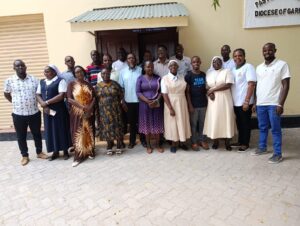
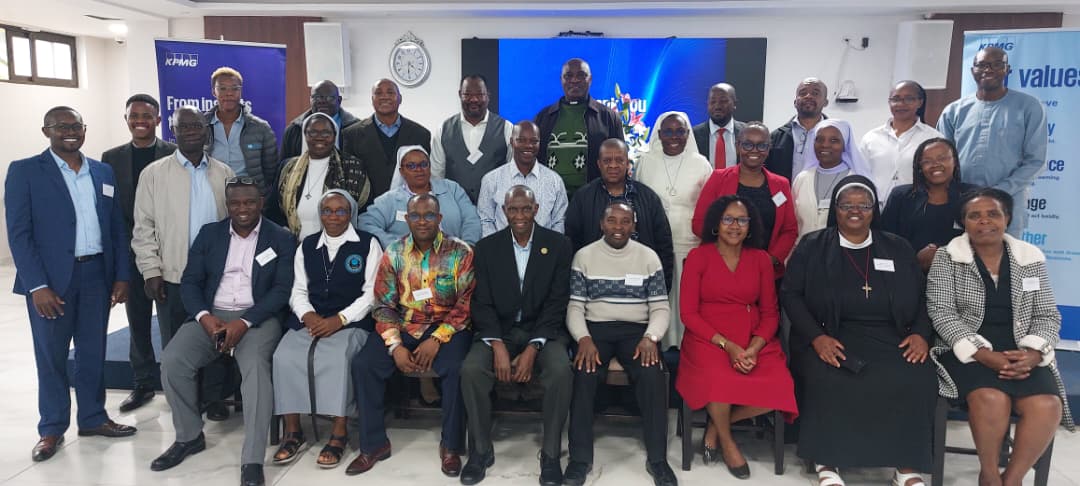
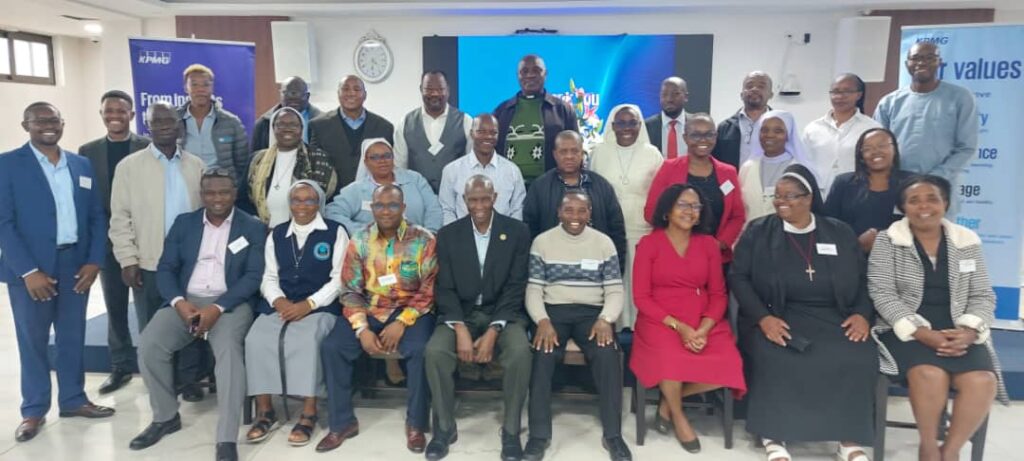
The Jesuit Centre for Safeguarding in Africa (JCSA) participated in the Strengthening Sustainability and Leadership for Safeguarding Missions Non-Financial Support (NFS) 3 Convening on Fundraising, Resource Mobilisation, Leadership and Governance, held 3–4 March 2026 at Roussel House. Its Director, Ms. Lucy Monari, joined leaders from across Africa for two days of dialogue, learning, and strategic reflection on organisational sustainability and leadership in a changing development landscape.
The convening gathered representatives from faith-based institutions, civil society, and development partners. It is part of the wider Non-Financial Support initiative, which aims to boost resilience and effectiveness in social impact sectors. Sessions received technical support from KPMG’s International Development Advisory Services and local partners.
This gathering highlighted the urgent need for organisations such as JCSA, focused on safeguarding vulnerable persons in Africa, to strengthen their institutional sustainability to ensure lasting impact. Fundraising, leadership, and governance were framed as essential components for advancing this mission in today’s funding environment.
Understanding the Changing Fundraising Landscape
Day one highlighted fundraising and resource mobilisation strategies. Participants explored the evolving funding landscape, stressing new trends. These include fewer traditional donations, greater accountability demands, increased digital giving, and a push for measurable impact.
The sessions emphasised that resource mobilisation should be understood not simply as fundraising, but as a strategic and continuous process of identifying and securing both financial and non-financial resources necessary to sustain organisational missions.
Speakers underscored that effective resource mobilisation strengthens organisational resilience, supports programme expansion, and builds donor confidence. At the same time, it requires strong institutional systems, clear strategic planning, and consistent communication of impact.
Participants examined various sources of funding available to mission-driven organisations. These include internal sources such as income-generating initiatives, membership contributions, and institutional activities, as well as external sources including individual donors, corporate partnerships, foundations, government funding, and international development partners.
The discussions also highlighted new opportunities emerging within the funding ecosystem. Areas such as climate action, youth empowerment, gender equality, and social protection are increasingly attracting global investment. Organisations that align their work with these emerging priorities may be better positioned to access new funding streams.
Building Stronger Resource Mobilisation Systems
A central theme of the convening was the need for organisations to adopt structured and long-term approaches to resource mobilisation. Experts stressed the importance of developing clear resource mobilisation strategies spanning three to five years. Such strategies should define funding targets, identify priority programmes, and outline concrete plans for diversifying income streams.
Participants also reflected on common challenges that hinder effective fundraising. These include weak capacity for proposal development, limited donor mapping, over-reliance on a single funding source, inadequate financial systems, and poor documentation of programme impact.
Overcoming these challenges calls for investment in organisational capacity. Organisations should strengthen governance, improve monitoring and evaluation, and maintain transparent reporting. These steps help build donor trust.
Another important lesson from the discussions was the concept of “friends raising” rather than merely fundraising. Building long-term relationships with supporters, partners, and stakeholders is often more sustainable than focusing solely on financial contributions. Strong partnerships and networks can open doors to collaboration, knowledge exchange, and shared resources.
For organisations working in safeguarding and social protection, such partnerships are particularly critical. Safeguarding efforts require collaboration across institutions, sectors, and countries. Strengthening relationships with donors and partners, therefore, supports not only organisational sustainability but also broader collective action in protecting vulnerable populations.
Leadership and Governance for Sustainable Impact
The second day of the convening shifted focus to leadership and governance within mission-driven organisations. Participants examined the traits of effective leaders and the governance structures required to sustain high-impact organisations.
One of the central insights from the leadership sessions was the need to balance mission fidelity with operational excellence. Faith-based and social mission organisations often operate within complex environments where values, identity, and sustainability must be carefully aligned. Leaders must therefore navigate what presenters described as the “hard middle”, where mission commitments intersect with financial and operational realities.
Participants explored governance frameworks that help organisations maintain both integrity and sustainability. These frameworks emphasise transparency, accountability, subsidiarity in decision-making, and competency-based leadership. Effective governance systems ensure that organisations remain aligned with their mission while maintaining professional standards of management and financial stewardship.
The sessions addressed concrete leadership challenges organisations often face, especially continuity, internal alignment, and institutional stability, which go beyond typical leadership concerns and can disrupt operations, directly impacting programme delivery and organisational effectiveness.
A key topic discussed was the complexity of managing organisational change. Transitions, whether structural, strategic, or personnel-related, often generate uncertainty within teams. Staff may struggle to adapt to revised priorities, reporting lines, or working methods, especially when change is not clearly communicated or properly supported. In mission-driven organisations, where work is deeply values-based, such disruptions can damage morale and commitment if not carefully handled.
Closely linked to this is the imperative to conduct difficult conversations within teams. Leaders must decisively address underperformance, resolve conflicts, or realign staff expectations. Yet, many organisations lack established methods for managing these conversations effectively. Consequently, issues are avoided or deferred, compounding tensions, reducing productivity, and weakening team cohesion. Effective leadership requires engaging in candid, respectful dialogue that not only enforces accountability but also sustains trust.
Another critical challenge highlighted was succession planning and institutional continuity. Many organisations rely heavily on specific individuals who possess essential knowledge, relationships, or technical expertise. When key people exit, through resignation, reassignment, or retirement, significant disruption to workflow and institutional memory often follows. Incoming staff or new leadership must frequently rebuild processes, reestablish partnerships, and relearn systems from scratch.
This disruption is most acute in work progression. Ongoing projects may stall or lose momentum as new staff acclimate to context, priorities, and history. Sometimes, documentation is incomplete, obsolete, or inaccessible, further hindering transitions. Likewise, changes in management can shift strategic direction or decision-making, forcing teams to recalibrate even with initiatives already underway. These disruptions can result in duplicated effort, implementation delays, and, at times, the loss of prior achievements.
The lack of structured handover processes and knowledge management systems directly intensifies these challenges. Without clear documentation, standard operating procedures, or formal mentorship and transition frameworks, organisations undoubtedly lose essential insights during staff turnover. This damages efficiency and erodes donor trust and stakeholder relationships, especially when continuity and reliability are non-negotiable.
To mitigate these risks, the sessions emphasised four key recommendations: proactive succession planning, institutionalising knowledge, strengthening internal systems, and embedding continuity planning in organisational strategy. Specifically, this involves developing clear documentation practices, establishing handover protocols, investing in staff capacity-building, and ensuring continuity planning is integrated. These actions help organisations reduce vulnerability to disruption and ensure their mission and impact are sustained, regardless of personnel changes.
A particularly useful leadership framework discussed during the convening was the CLARITY model for managing difficult conversations. The model encourages leaders to structure conversations around seven key elements: Context, Listening, Alignment, Reality, Intent, Trust, and Yield. By applying this framework, leaders can address sensitive issues in ways that promote transparency, collaboration, and constructive outcomes.
Such leadership tools are essential for strengthening organisational culture and ensuring that teams remain aligned with shared goals and values.
Learning, Collaboration, and Shared Commitment
Beyond the technical sessions, the convening also created space for peer learning and collaboration among participating organisations. Through group discussions, case studies, and reflection sessions, participants shared practical experiences, challenges, and innovative approaches to strengthening organisational sustainability.
These exchanges were particularly valuable in highlighting the diversity of organisational contexts across the region. While each institution faces unique challenges, many share similar concerns regarding financial sustainability, leadership capacity, and institutional governance.
For JCSA, participation in the convening provided an opportunity to engage with peer organisations working in related fields, exchange ideas on strengthening institutional systems, and identify practical strategies that can support the Centre’s long-term mission.
Looking Ahead
The insights gained during the NFS 3 Convening highlight several key takeaways for organisations like the Jesuit Centre for Safeguarding in Africa. It is essential to cultivate resilient, adaptable institutions, prioritise relationship-building alongside fundraising, invest in governance and leadership development, and stay attuned to emerging opportunities in areas such as climate, youth, and gender. These insights reinforce the importance of strong, sustainable structures to support safeguarding missions across the continent.
Safeguarding work requires sustained engagement, capacity building, and institutional collaboration. Ensuring that organisations working in this space remain financially stable, well-governed, and strategically positioned is therefore essential.
As the Director of JCSA, Ms. Lucy Monari’s participation in the convening reflects the Centre’s ongoing commitment to continuous learning, institutional strengthening, and collaborative engagement with partners across Africa and beyond.
JCSA will apply lessons from the convening in its ongoing efforts to enhance organisational development, partnerships, and resource mobilisation. By focusing on leadership, governance, and fundraising, JCSA aims to advance its safeguarding mission and maintain support for vulnerable individuals and communities across Africa.